“I STOPPED TELLING DAD BECAUSE HE NEVER BELIEVES ME.” LESS THAN 24 HOURS LATER, I TOOK MY DAUGHTER TO THE HOSPITAL WITHOUT TELLING HIM…
I will never forget the way my fifteen-year-old daughter looked at me that night.
Her voice was barely a whisper.
“I stopped telling Dad because he never believes me.”
Those words stayed with me.
Less than twenty-four hours later, I secretly picked Madison up from school and drove straight to the hospital without telling my husband.
I thought I was simply protecting my daughter from a father who refused to take her pain seriously.
I had no idea I was about to uncover something far more terrifying.
Before the doctors had even finished examining her, one physician suddenly stopped speaking.
The color drained from his face.
The room fell silent.
And as I watched him stare at Madison's medical chart, a terrible realization settled over me.
The nightmare I had feared wasn't ending.
It was only beginning.
---
I knew something was wrong with Madison long before anyone else in our house was willing to admit it.
At first, the signs were subtle enough to dismiss.
Every afternoon, she would come home from school, drop her backpack beside the front door, and disappear into her bedroom without touching dinner.
She complained of nausea almost every day.
She began rubbing the lower part of her stomach whenever she thought nobody was watching.
At night, I would quietly open her bedroom door and find her curled beneath the blankets in complete darkness, too exhausted to finish homework that had once seemed effortless.
This wasn't my daughter.
Madison had always been bright, energetic, impossible to slow down.
She filled the house with music.
She raced from one soccer practice to another.
She carried her camera everywhere, forever chasing sunsets and capturing little moments that everyone else overlooked.
And when she laughed with her friends, her laughter was so contagious that even strangers smiled.
Now, I watched that vibrant girl disappear little by little.
It felt like I was losing her while she was still standing right in front of me.
After two weeks, I finally told my husband we needed to take her to a doctor.
He barely looked up from his phone.
“It's probably just a stomach bug.”
I stared at him.
“She’s been sick for two weeks.”
“She'll get over it.”
Another week passed.
Madison wasn't getting better.
She was getting worse.
I brought it up again over breakfast.
My husband sighed, placed his coffee on the table, and looked at me as though I were creating a problem where none existed.
“Sarah, she's fifteen.”
He shook his head.
“Teenagers stay up all night, eat junk food, spend half their lives on their phones, and then complain that they don't feel good.”
“She’s losing weight.”
“Maybe she's trying to.”
I stared at him.
“I don't think that's what's happening.”
“You always expect the worst.”
That was his pattern.
He never had to shout.
He never called me names.
He simply had a way of making every concern sound irrational until I began questioning my own instincts.
Even when every mother's instinct inside me was screaming that something was terribly wrong.
My husband had always been obsessed with unexpected expenses.
He worked hard, paid every bill on time, and knew exactly where every dollar went.
But somewhere along the way, saving money had become more important than listening.
Every doctor's appointment was treated like a financial emergency.
Every medical test had to be justified.
Every concern had to be serious enough to warrant the cost.
“If we ran to the hospital every time someone complained,” he liked to say, “we'd spend the rest of our lives paying medical bills.”
I wanted to argue.
Instead, I started watching Madison more closely.
And once I did, I couldn't unsee what he refused to notice.
She stopped eating breakfast.
She started leaning against the bathroom counter because standing for more than a few minutes exhausted her.
One morning, I watched her reach for the hallway wall after nearly collapsing from dizziness.
The moment she realized I had seen it, she forced a weak smile.
“I'm okay, Mom.”
She wasn't.
I knew it.
And deep down, I think she knew it too.
---
One evening, after sunset, I found her sitting alone on the back porch.
The weather was warm, yet she was wrapped in one of her father's oversized hoodies.
She had her knees pulled tightly against her chest and was staring into the darkness.
For the first time, she didn't look fifteen.
She looked like a frightened little girl.
I sat beside her.
“Sweetheart… are you okay?”
She shrugged.
“My stomach hurts again.”
“How bad?”
She didn't answer immediately.
Then she whispered:
“Worse than yesterday.”
My heart tightened.
I gently moved a strand of hair away from her face.
“When did it start getting worse?”
“A while ago.”
“Why didn't you tell me?”
She looked at me.
There was something in her eyes that I will never forget.
Sadness.
Resignation.
And something dangerously close to giving up.
“I did.”
I frowned.
“What do you mean?”
Her eyes dropped to her hands.
“I just stopped saying anything because Dad always thinks I'm making it up.”
My heart broke.
“When did he make you feel that way?”
“Every time I told him I didn't feel good.”
Her voice trembled.
“He always says I'm just looking for an excuse.”
I pulled her into my arms.
“You never have to hide your pain from me. Ever.”
That was when she finally broke.
She didn't sob.
She didn't scream.
She simply cried silently against my shoulder, her entire body trembling as I held her.
And for the first time, I realized how long she had been suffering alone.
---
The following Monday morning, my phone rang.
It was the school nurse from Madison's high school in Chicago.
“Mrs. Carter, Madison has been in my office twice today.”
My stomach tightened.
“Why?”
“She says her stomach pain is getting worse. She's been experiencing it for several weeks.”
“Does she have a fever?”
“No.”
“Did she eat lunch?”
There was a pause.
“Only a few bites.”
Then her voice became more serious.
“I can't diagnose her, Mrs. Carter. But I strongly believe Madison needs to be examined by a doctor as soon as possible.”
My stomach dropped.
This wasn't a casual suggestion anymore.
Someone else had noticed.
Someone outside our family had seen what I had been seeing.
Twenty minutes later, my husband walked through the front door.
I told him everything.
He listened while loosening his tie.
Then he shrugged.
“School nurses tell parents to see doctors over every little thing.”
I stared at him.
“She wasn't being casual.”
“She said Madison needs to be evaluated.”
He rolled his eyes.
“So now we're taking medical advice from someone who hands out Band-Aids?”
I couldn't believe what I was hearing.
“Our daughter has been sick for almost a month.”
“She'll probably be fine.”
“You don't know that.”
“Neither do you.”
Something inside me snapped.
“What if something is seriously wrong?”
He didn't answer.
Not immediately.
Not even after several seconds.
He simply walked away.
And that was the moment something became painfully clear.
I wasn't just fighting to get my daughter medical attention.
I was fighting against the person who should have been standing beside me.
The next morning, while my husband believed Madison was sitting safely in her first-period classroom, I made a decision.
I picked her up from school without telling him.
We drove straight to the hospital.
No argument.
No permission.
No explanation.
Just me, my daughter, and the growing certainty that I could no longer afford to wait.
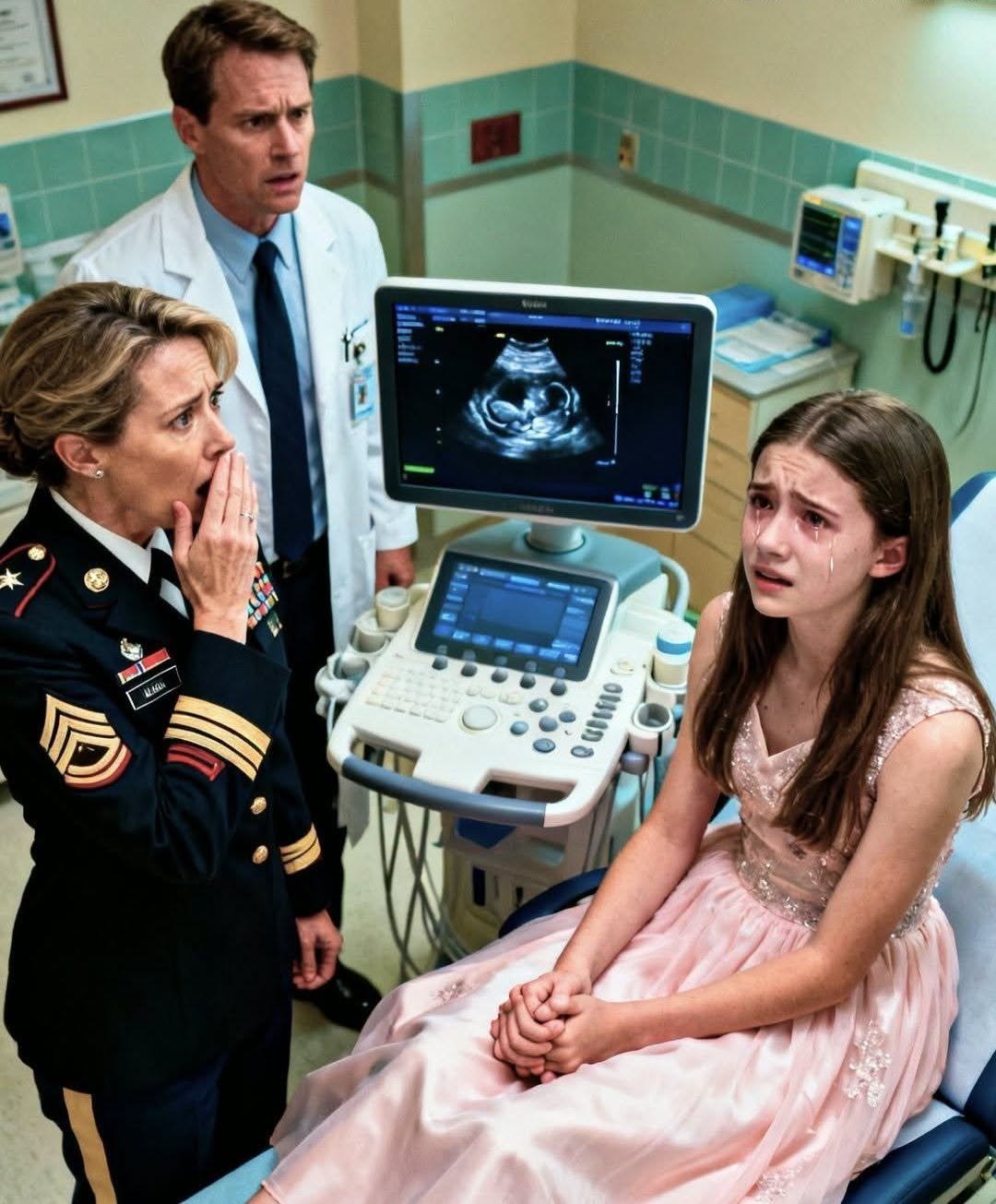
The doctors began examining her almost immediately.
Blood tests.
Scans.
Questions.
More questions.
Then one physician looked at the results.
He stopped mid-sentence.
His expression changed.
The color slowly disappeared from his face.
He looked at Madison.
Then at me.
Then back at the chart.
Nobody spoke.
The room became unbearably quiet.
Finally, the doctor took a slow breath.
“Mrs. Carter…”
His voice was different now.
Serious.
Almost shaken.
“There’s something here that we need to talk about.”
I reached for Madison's hand.
And in that instant, I knew.
Whatever we were about to hear…
would change our family forever.